
The Bravest Man I Ever Met
Thirteen wounded, one Huey, and a pilot who wasn’t coming back
In the American Southwest it might be called a high mesa which evokes the picturesque grandeur of those desolate and beautiful landscapes. In the Annamite Mountains of what was then South Vietnam, this place was nothing like the Southwest. It was remote, eerie, strange, haunting, and extremely dangerous.
A pinnacle rose out of the surrounding triple-canopy jungle valley floor 900 feet — a natural impregnable fortress. One would think it impervious to ground attack because its steepness could challenge a mountain goat. One would also think no one in their right mind would attempt to scale it to launch an attack. But who said the North Vietnamese were using their right minds?
The slopes tapered sharply to a flat summit, which was devoid of vegetation thanks to Agent Orange defoliant. Perimeter bunkers were situated at the crest of the slope. Defensive wire of all types was strewn like chain mail.
It might take ten minutes to walk the firebase from end to end. To circumnavigate the perimeter was an easy thirty-to-forty-five-minute stroll. It held a battalion of troops and a helipad which could accommodate four Huey helicopters.
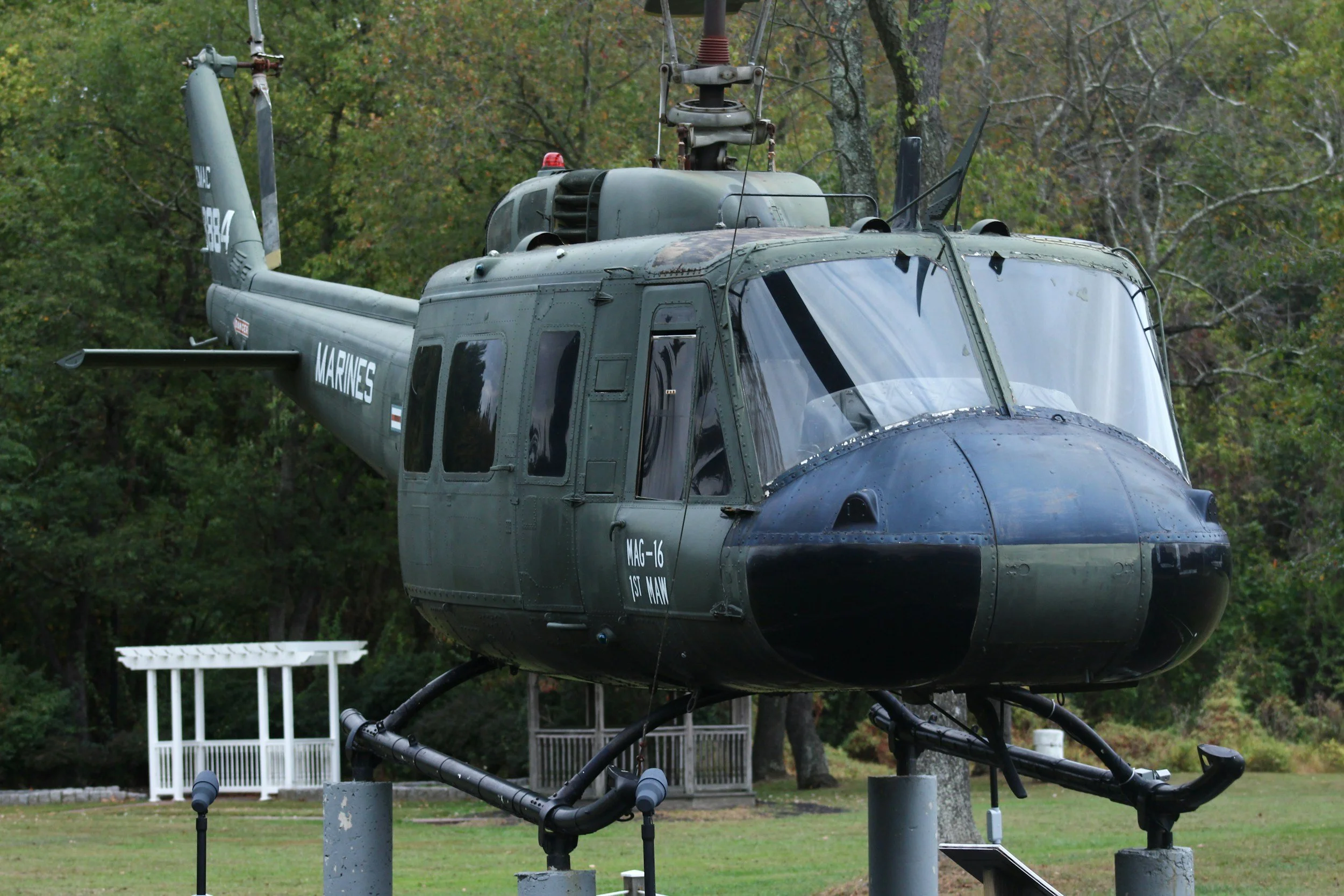
photo by Jessica Cogar
Companies rotated to this place on a monthly basis. My company happened to draw perimeter duty at month’s end, a pay day. My field time was over, and I was now the company executive officer, the “XO.” The executive officer’s duties included paying the men and Uncle Sam requires the troops be paid or refuse it on the last of each month, regardless.
I drew funds from the Division Finance Office and received a sandbag jammed with various denominations of MPCs — Military Payment Certificates, as US currency is forbidden in combat zones. This stuff looked like Monopoly money and was almost the same size. Vietnamese piasters of a few denominations were included for men who wanted to do business with the locals.
I caught the last supply chopper of the day and I brought along two five-gallon containers of ice cream I traded the Seabees for two folding-stock AK-47 rifles in the original packaging. Seabees are very accommodating businessmen.
I arrived at the outpost close to dark. Payday would have to wait until morning. I shared a bunker with a fellow lieutenant, his platoon sergeant, and a few others.
At 0200 hours on the dot, NVA sappers blew two perimeter bunkers not far from us. Every time my unit got hit it seemed it was always at 2:00 a.m. Charlie was on time tonight.
This monsoon night was dreadful. Rain fell with such intensity one’s field of vision was limited to ten yards, if that.
I grabbed my .45, ran outside and, you guessed it, left the sandbag with thousands of dollars in the bunker. Everyone was out of the bunker by the second explosion.
The rain was curtain-like and it was as dark as the secret place in the Devil’s wallet. I spied movement to my left. Was that an NVA sapper running through a hole in the wire or was the rain and my adrenalin-saturated mind playing tricks? What was that? – a blur; an incomplete image. Did it happen? The noise happened. Certainly, the rain. The wounded, too.
All men in the destroyed bunkers were badly wounded. I organized a party to gather the wounded, wrap those who couldn’t walk in ponchos, and bring them to a secure place for evacuation. Two men could not be moved very far so I decided we would evacuate from that spot.
The ground was uneven but with two enemy 12.7 mm heavy machine guns harassing the far side of the perimeter, evacuation had to be from this spot on the lee side of the hill to shield the helicopter. Either of those heavy machine guns could destroy the chopper.
I requested immediate medevac of the thirteen wounded. Six combat-loaded troops was the standard full load for a Huey helicopter under normal circumstances in Vietnam because of the dense air. I assumed two helicopters would be sent.
Fifteen minutes later a pilot radioed he was close. I could hear his chopper below us in a valley. We had a brief exchange about our location. The pilot requested we pop illumination flares to guide him to our position which was like lighting up a billboard telling the NVA, “Hey, we’re over here.”
It seemed as if he was hovering in the void below us getting a feel for the mountainside. Then the pilot turned on his searchlight and eased close to the mountainside. I thought he must be insane with so many bad guys around. Enemy fire continued but he was undaunted. Onward and upward, he slowly crept up the slope, the chin bubble of his Huey 15 feet above the ground until he reached us. He could not land without exposing the chopper to the machine guns.
The perimeter was still under attack.
Because the slope was steep, he was only able to put one skid on the ground while maintaining a hover to stabilize his helicopter while we loaded the wounded.
When the aircraft was situated, I stepped on the skid to speak with the pilot. His rank was major and he was African American. The red lights from his control panel highlighted his handsome features and square jaw that seemed to emphasize his resolve. He appeared as calm as if he had just ordered coffee and a piece of pie. I advised him of the number of wounded — thirteen. Knowing the usual weight limit, he said in an even tone, “Put ‘em all on. I’m not coming back.”
Two or three bullets struck the chopper as we loaded the wounded into a very crowded space. He was unfazed. His countenance unchanged. I jumped off the skid and gave him a thumbs-up signal to indicate we were finished. A slight smile appeared, he nodded and turned away.
I got away from the aircraft as he applied power. The chopper shook and bucked like it was going to vomit. He gained a few feet of altitude with the engine screaming. It slid sideways away from us a few feet at a time — moving ever so slowly over the abyss. Tracer bullets followed his movement. He suddenly pointed the nose of the chopper to the valley floor and dove. I heard nothing for the longest time — probably ten seconds and then his turning rotors sent back that unique and familiar whomp, whomp, whomp of a Huey. I felt relieved knowing our guys were on their way to a hospital in Da Nang.
I returned to the bunker when the bad guys were repulsed and found the sandbag with cash where I left it. Lucky me.
A friend who led the reaction force that blunted the attack joined me. He asked for names of wounded, since it was his platoon’s sector of the perimeter. I didn’t know more than a few of them. He opened a bottle of Jack Daniel’s, took a healthy gulp and passed it to me. We sat in silence for a minute or so. He commented, “He took thirteen? Mike, he had his fucking headlamp on coming up the side of the hill! In this fucking rain? Do you believe that guy?”
Words came out on their own: “That’s the bravest man I ever met, Bobby.”
To this day — almost sixty years after the fact, my eyes still open at two o’clock as if on a programmed timer. After my time in Vietnam, I habitually got out of bed every night and checked my house perimeter with my Yellow Lab, Dusty the Wonder Dog in tow, checking doors and windows. Dusty is long gone, and I no longer walk the interior perimeter of my home; opening my eyes and listening are sufficient.
Michael Hennessy