The Great Ketamine Boogie Woogie

Uncle Sugar says the age limit is gone. Apparently, I’m still too old.

Try to recall an early scene in Joseph Heller’s classic satire Catch 22 when Yossarian’s frustration level is unbearable. He demands the squadron clerk, ex-PFC Wintergreen allow him to see his boss, Maj. Major, but the good major can’t be seen. He is out when he’s in, and out when he’s out. Yossarian’s frustration worsens because he knows he’ll never get to meet him.

What does that have that to do with anything? Until a few days ago, nothing. Thanks to the Veterans Administration (VA) reality now mirrors fiction.

Fifty-seven years ago, I was an infantry platoon leader in Vietnam. Vivid memories of that time are never more than a split second away. I am a card-carrying member of the PTSD club and have been diagnosed with what is referred to as treatment-resistant depression. 

Thirty percent of patients diagnosed as clinically depressed are treatment resistant. That means we’re special; drugs don’t work on us. I have taken every happy pill that Big Pharma has cranked out over the past four decades and personally checked off most every adverse reaction/side effect listed in the PDR, the Physicians’ Desk Reference of pharmaceuticals, all without positive and sometimes adverse results. 

Medical research has made great progress in alternative therapies for my variety of depression. 

I learned of these radical therapies while reading a treatise entitled, The Body Keeps the Score: Brain, Mind, and Body in the Healing of Trauma, by Bessel van der Kolk, M.D., which details how trauma impacts and is physically manifested in our bodies. 

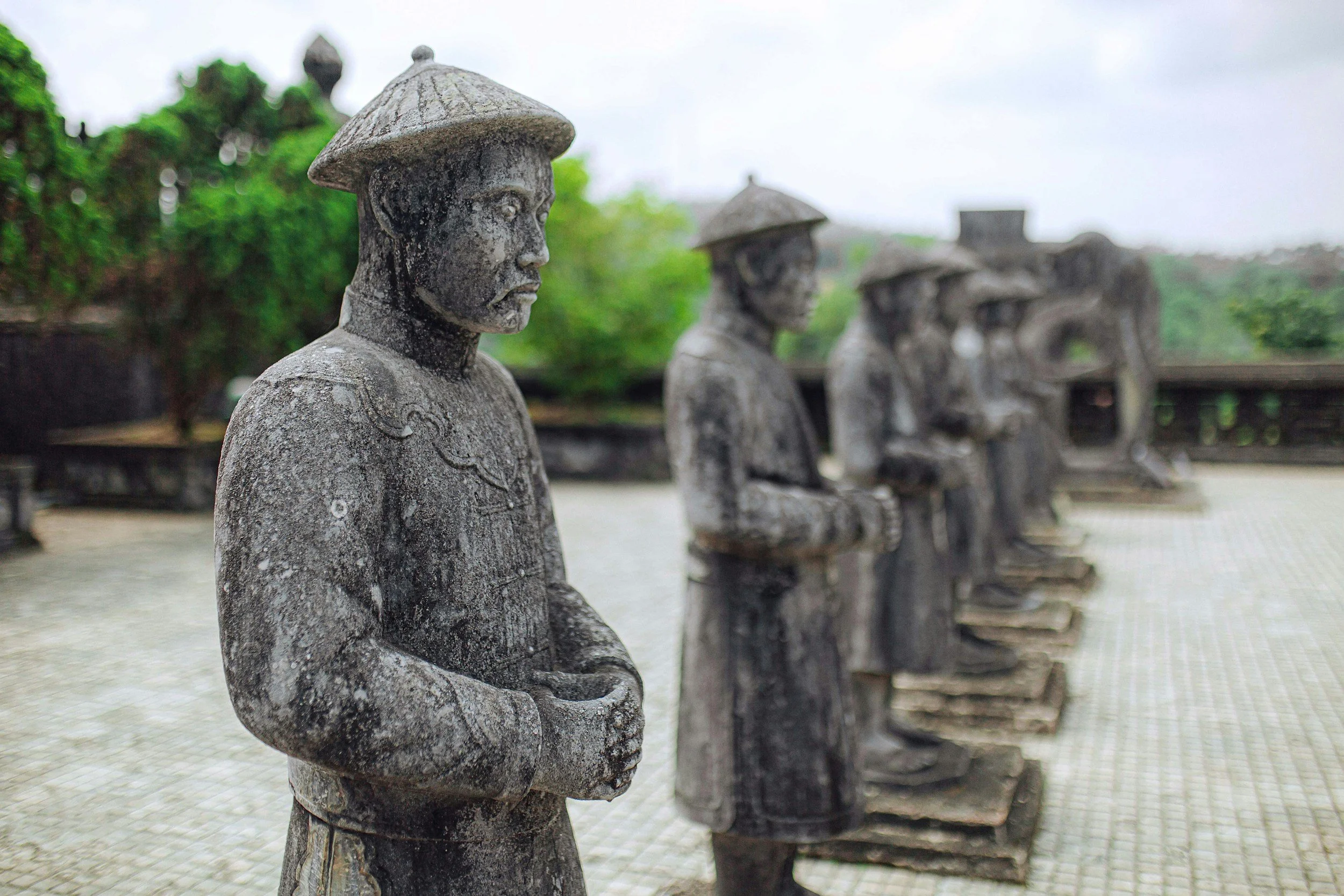
Photo by Peter Herrmann

The new menu of modalities includes: TMS, temporal magnetic stimulation to the pre-frontal cortex; psilocybin or “magic mushrooms;” electroconvulsive therapy that is guaranteed to wipe out a good chunk of one’s memory banks à la R. P. McMurphy in One Flew Over the Cuckoo’s Nest. They offer ketamine (an anesthesia medication in higher doses), esketamine, a nasal-spray derivative of the former drug, and others. I read the patients’ testimonials about ketamine and I longed to share their success. It seemed almost too good to be true.

Eighteen months ago, I learned the VA has a huge quiver of psyche tools, the result of many government-funded research studies: Magic mushrooms, LSD, things previously considered harmful are now used to effectively treat ‘sticky’ depression, the kind that doesn’t respond. The government, affectionately referred to as Uncle Sugar, widened it’s quiver of available tools to combat PTSD. Timothy Leary's mantra sixty-five years after he advised us to turn on, tune in, and drop out is now standard operating procedure at Uncle Sugar’s VA Medical Centers.

The VA imposed an age limitation; no patients older than age sixty-five qualify. The reason given is the potential for increased intracranial pressure, which translates to fear of strokes. I know from experience you can’t fight City Hall, so I gave up seeking Uncle Sugar’s help.

I pursued ketamine therapy at personal expense, outside the VA medical system because it sounded so right. The board-certified neurologist I consulted said the VA’s age restriction was, and I am quoting, “Absolute bullshit! We are there to monitor you and react appropriately if that happens.” 

I underwent a four-week course of therapy with an $8,000 price tag, none of which was reimbursed by the VA, but I knew that from the get-go. The results were outstanding; a lightness of being I sought for decades, but it did not effect a cure, but it caused an improvement in my mood.

I learned the VA’s ketamine age restriction was removed and requested a consultation through my regular VA psychiatrist. Within weeks I was in a Zoom session with a VA doctor to determine whether I’d qualify for ketamine therapy.

The Zoom session started, and I made an introductory statement of my clinical history underscoring the lack of success with a laundry list of antidepressants. I requested to be considered a ketamine candidate since the age restrictions were eliminated.

The doctor replied essentially saying the medical equivalent of, “You can’t get there from here.” I am paraphrasing, but the following is close. The doctor opened with: “Yes, it’s true the age restriction has been removed, but the clinical data indicates ketamine is problematic in older patients, so in your case, the age limitation remains. You do not qualify because of your age.”

I queried. “So, the age restriction was not eliminated, right?”
“No, the age restriction was eliminated.”
“Doc, I don’t follow you. If the age restriction was removed, then it would logically follow that there is no reason I should not qualify for this therapy.”
“You’re too old.”
“Doctor, I’m not trying to be disrespectful, but are you listening to yourself?”
He didn’t reply other than to restate the conclusion that I don’t qualify.

I shook my head and laughed as the video conference ended. Whether the doctor noticed my cynical laugh did not cross my mind; I didn’t care. 

I wanted to scream, “Yossarian! I found Maj. Major!”

Michael Hennessy
MIchael Hennessy
You’re Going Home, Dude

A minor wound, a one-way ticket out of Vietnam, and a few strange detours to first class

I arrived by helicopter at the 91st Evacuation Hospital, Chu Lai, Vietnam in late May 1968. I had a minor ding that required surgery. The draftee surgeon, a Capt. Caputo from Chicago, advised me the hospital’s operating room had yet to be certified sterile. Without that certification there would be no surgery. Dr. Caputo continued, “This is an evacuation hospital, lieutenant. I can’t send you to one of the hospitals across the road. I must send you to Japan.”

I remember thinking: How cool is that?  Wonder if I’ll have time to buy a camera or get some stereo gear?

I had been in Nam exactly ten months. I figured I would go to Japan, have a twenty-minute surgery, stay a couple days and then di di mau (Vietnamese for go quickly) back to the Jolly Green Jungle.

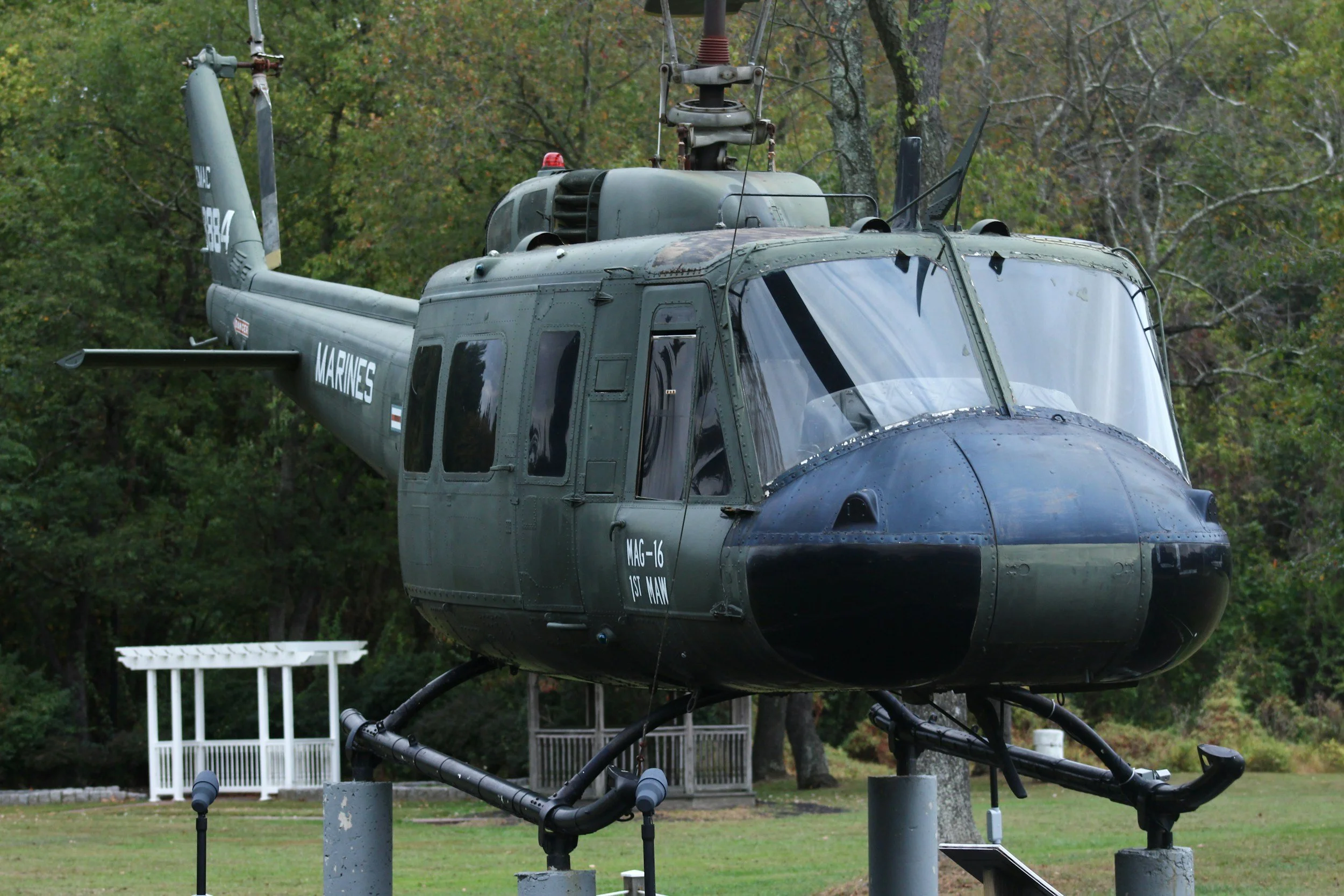
photo by Khanh Nguyen

Dr. Caputo’s face countenanced disbelief. “You don’t get it do you, lieutenant? Uncle Sam’s regulations say a soldier’s Vietnam tour is complete when he has served ten months and five days. By the time you have surgery and a few days recovery, you’re done. You’ve got a one-way ticket out of Nam. You’re going home, dude.”  

Try to imagine and sense a free fall before a parachute opens or a jump from a high dive before you hit the water. That would be close, but I was as stunned as if Muhammad Ali decked me. Home? Yesterday I was burning leeches off my body and trying to sleep in holes filling with water, eating “ham and mother f’ers” too often because officers chose c-ration meals last. 

The c-ration meal, ham and lima beans set a new and disgusting low in gastronomy. Nobody wanted to eat that foul substitute for food. It was terrible, especially when eaten cold. 

That chapter of my life was closing with the suddenness and shock of the sound of a screen door slamming shut on a hot and stormy Kansas afternoon. 

Surgery was performed on my fifth day at the 249th General Hospital, Camp Drake, Japan. I was now “magic” — my tour was complete.

Six or seven months before, my platoon was on patrol southwest of Da Nang. Nothing much was happening. My recollection is we had stopped for lunch. We observed three C-123 cargo planes flying in a Vee formation a mile or more upwind. They were spraying defoliant that I later learned was Agent Orange. Minutes after seeing them, my mouth had a chemical taste like the smell of gasoline or lighter fluid. Everyone complained about it. I radioed battalion and was assured: “Don't worry! You could drink a gallon of that stuff, and it wouldn’t hurt you.” 

Right! Now we have a Fourth lie to add to the most famous lies trilogy, right after, “check’s in the mail,” or “I’m from the IRS and I’m here to help you,” and of course, the most notorious one having something to do with your mouth.

Two days before I was to catch the Freedom Bird back to the World at Tachikawa Air Force Base, I awoke and discovered I had grown, virtually overnight, a chin annex. I looked like Peter Pelican with a full beak according to a ward mate.

My role switched from ex-target to lab rat. Now, the draftee doctors who were earning their specialty stripes lined up at my bed and searched their medical menus for any test or procedure they might have missed during their residencies that they would now like to inflict on my convenient body. 

Surgeons removed the intruder and I remained at the hospital until early August cooling my jets. 

Japan was the Disneyland of my Twenties. I was raised in St. Louis but was unprepared for Tokyo’s vastness and bustle; the energy was astonishing — like New York City on a sugar high. 

The national rail system in Japan is as efficient as a Swiss clock. I went by train with a group of patients on a day trip to Tokyo’s famous Ginza District where we paid ten cents to sit and watch Dustin Hoffman and Anne Bancroft do their thing in The Graduate. The locals watched while standing in the aisles. They paid three cents. 

The movie soundtrack was in English with Japanese ideograms on the screen’s right side, read top to bottom. The actors recited their punch lines and the English-speaking audience — that being yours truly and about eight ex-walking wounded, immediately laughed.

Japanese heads bobbed as they read and seconds later, like thunder following lightening on a hot summer’s night, the Japanese audience laughed in a low gargled rumble: “Ho-ho-ho-ho-ho-ho,” which listening to was almost as funny as the movie. Here’s to you, Mrs. Robinson!

August 8, 1968, was my departure date. I arrived for my flight hours early. I had no uniform. When my empty duffel bag arrived at the hospital, my uniform and the civilian clothes I bought in Hong Kong while on R & R, my penny loafers, and the Russian-made watch that I’d taken as a war souvenir/trophy were gone — stolen. 

I cobbled together a uniform from the lost and found closet consisting of a set of khakis with short sleeves and the trousers about two inches short. The blouse’s arms were scarred where sergeant’s stripes once called home. My jungle boots were weathered, meaning they looked like crap — devoid of color. I bought the basics of uniform branch and rank insignia at the Hospital PX. I was nowhere close to guard-duty supernumerary standards. I got a couple “looks” from several field grade officers assessing the sorry state of my appearance, but what were they going to do, send me to Vietnam? 

The Officers’ Club was adjacent to the airport. I didn’t know slot machines were allowed on post. I mused Uncle Sugar must have mellowed to condone gambling.

I am on the fence about Karma. On this day, however, I’m convinced the planets converged and two significant life events occurred. 

First, as I walked toward the restaurant for a sandwich, about one-third way I paused as if someone tapped me on the shoulder. The middle slot machine called to me like the Sirens beckoning Odysseus to their shores. The amount you could lose on a single crank of the bandit’s one arm ranged from a penny to a quarter for high rollers.

Being flush with twelve months’ pay I risked a quarter. I took it from my pocket and put it in the gash where the money goes. The wheels turned and the lights flashed. One bar… two bars … three bars. I won $300.00! If this was an omen about the future, then, fasten your seatbelts boys and girls, because it is going to be a fun ride.

The other significant thing occurring that day I would not realize for thirty years when my daughter announced she was getting married. Her future husband, now my talented artist son-in-law, was born that same magical day.

A thirteen-hour sardine-like packed Braniff Airways 707 flight deposited me at Travis Air Force Base, California. Many of us hopped a shuttle to San Francisco International Airport to continue our homeward journeys. I got a “military standby” ticket on TWA non-stop to its hub in St. Louis and was put in first class. It cost sixty dollars. Today you can’t check your bags for that price.            

The stewardess asked. “Coming home from Vietnam, lieutenant?”
“Yes ma’am.”
“What would you like to drink?”
“Everything!”

Five hours later, sporting my new kiddie flight wings the stewardesses awarded me, and I doubt it was for good behavior, I ambled into the main terminal building of Lambert St. Louis Field. Thankfully, I wasn’t driving. 

My parents were there to greet me. We stopped for dinner. The waitress took drink orders and cheerfully said, “Tonight’s special is ham and lima beans.”

Having left tact in my other lifetime, I blurted out. “You’ve gotta be shittin’ me, lady.”

Michael Hennessy

MIchael Hennessy
The Bravest Man I Ever Met
 

Thirteen wounded, one Huey, and a pilot who wasn’t coming back


In the American Southwest it might be called a high mesa which evokes the picturesque grandeur of those desolate and beautiful landscapes. In the Annamite Mountains of what was then South Vietnam, this place was nothing like the Southwest. It was remote, eerie, strange, haunting, and extremely dangerous.

A pinnacle rose out of the surrounding triple-canopy jungle valley floor 900 feet — a natural impregnable fortress. One would think it impervious to ground attack because its steepness could challenge a mountain goat. One would also think no one in their right mind would attempt to scale it to launch an attack. But who said the North Vietnamese were using their right minds? 

The slopes tapered sharply to a flat summit, which was devoid of vegetation thanks to Agent Orange defoliant. Perimeter bunkers were situated at the crest of the slope. Defensive wire of all types was strewn like chain mail. 

It might take ten minutes to walk the firebase from end to end. To circumnavigate the perimeter was an easy thirty-to-forty-five-minute stroll. It held a battalion of troops and a helipad which could accommodate four Huey helicopters.

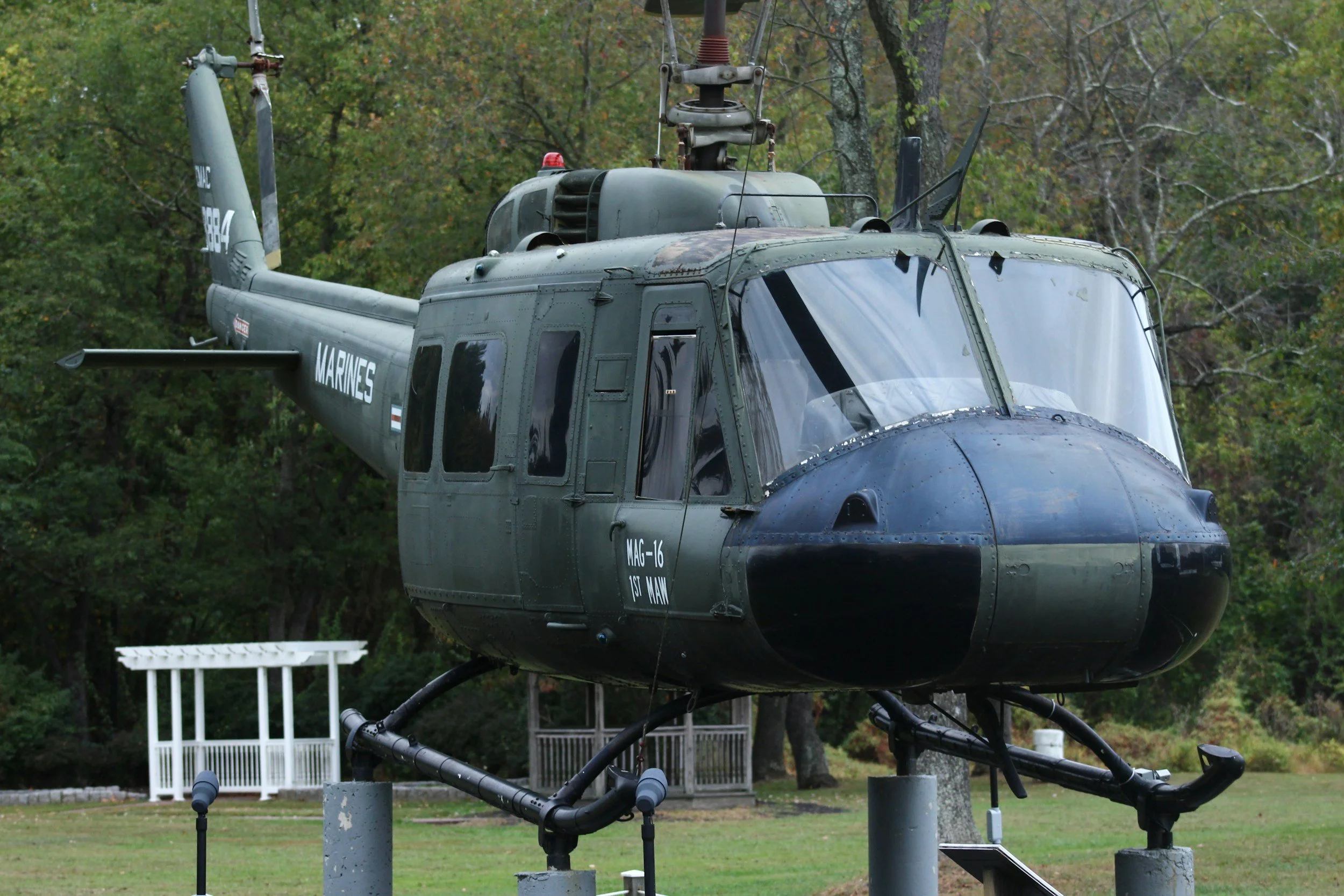
photo by Jessica Cogar

Companies rotated to this place on a monthly basis. My company happened to draw perimeter duty at month’s end, a pay day. My field time was over, and I was now the company executive officer, the “XO.”  The executive officer’s duties included paying the men and Uncle Sam requires the troops be paid or refuse it on the last of each month, regardless. 

I drew funds from the Division Finance Office and received a sandbag jammed with various denominations of MPCs — Military Payment Certificates, as US currency is forbidden in combat zones. This stuff looked like Monopoly money and was almost the same size. Vietnamese piasters of a few denominations were included for men who wanted to do business with the locals. 

I caught the last supply chopper of the day and I brought along two five-gallon containers of ice cream I traded the Seabees for two folding-stock AK-47 rifles in the original packaging. Seabees are very accommodating businessmen. 

I arrived at the outpost close to dark. Payday would have to wait until morning. I shared a bunker with a fellow lieutenant, his platoon sergeant, and a few others. 

At 0200 hours on the dot, NVA sappers blew two perimeter bunkers not far from us. Every time my unit got hit it seemed it was always at 2:00 a.m. Charlie was on time tonight.

This monsoon night was dreadful. Rain fell with such intensity one’s field of vision was limited to ten yards, if that. 

I grabbed my .45, ran outside and, you guessed it, left the sandbag with thousands of dollars in the bunker. Everyone was out of the bunker by the second explosion. 

The rain was curtain-like and it was as dark as the secret place in the Devil’s wallet. I spied movement to my left. Was that an NVA sapper running through a hole in the wire or was the rain and my adrenalin-saturated mind playing tricks? What was that? – a blur; an incomplete image. Did it happen? The noise happened. Certainly, the rain. The wounded, too. 

All men in the destroyed bunkers were badly wounded. I organized a party to gather the wounded, wrap those who couldn’t walk in ponchos, and bring them to a secure place for evacuation. Two men could not be moved very far so I decided we would evacuate from that spot. 

The ground was uneven but with two enemy 12.7 mm heavy machine guns harassing the far side of the perimeter, evacuation had to be from this spot on the lee side of the hill to shield the helicopter. Either of those heavy machine guns could destroy the chopper. 

I requested immediate medevac of the thirteen wounded. Six combat-loaded troops was the standard full load for a Huey helicopter under normal circumstances in Vietnam because of the dense air. I assumed two helicopters would be sent.

Fifteen minutes later a pilot radioed he was close. I could hear his chopper below us in a valley. We had a brief exchange about our location. The pilot requested we pop illumination flares to guide him to our position which was like lighting up a billboard telling the NVA, “Hey, we’re over here.” 

It seemed as if he was hovering in the void below us getting a feel for the mountainside. Then the pilot turned on his searchlight and eased close to the mountainside. I thought he must be insane with so many bad guys around. Enemy fire continued but he was undaunted. Onward and upward, he slowly crept up the slope, the chin bubble of his Huey 15 feet above the ground until he reached us. He could not land without exposing the chopper to the machine guns. 

The perimeter was still under attack.

Because the slope was steep, he was only able to put one skid on the ground while maintaining a hover to stabilize his helicopter while we loaded the wounded. 

When the aircraft was situated, I stepped on the skid to speak with the pilot. His rank was major and he was African American. The red lights from his control panel highlighted his handsome features and square jaw that seemed to emphasize his resolve. He appeared as calm as if he had just ordered coffee and a piece of pie. I advised him of the number of wounded — thirteen. Knowing the usual weight limit, he said in an even tone, “Put ‘em all on. I’m not coming back.”

Two or three bullets struck the chopper as we loaded the wounded into a very crowded space. He was unfazed. His countenance unchanged. I jumped off the skid and gave him a thumbs-up signal to indicate we were finished. A slight smile appeared, he nodded and turned away.

I got away from the aircraft as he applied power. The chopper shook and bucked like it was going to vomit. He gained a few feet of altitude with the engine screaming. It slid sideways away from us a few feet at a time — moving ever so slowly over the abyss. Tracer bullets followed his movement. He suddenly pointed the nose of the chopper to the valley floor and dove. I heard nothing for the longest time — probably ten seconds and then his turning rotors sent back that unique and familiar whomp, whomp, whomp of a Huey. I felt relieved knowing our guys were on their way to a hospital in Da Nang.

I returned to the bunker when the bad guys were repulsed and found the sandbag with cash where I left it. Lucky me.

A friend who led the reaction force that blunted the attack joined me. He asked for names of wounded, since it was his platoon’s sector of the perimeter. I didn’t know more than a few of them. He opened a bottle of Jack Daniel’s, took a healthy gulp and passed it to me. We sat in silence for a minute or so. He commented, “He took thirteen? Mike, he had his fucking headlamp on coming up the side of the hill! In this fucking rain? Do you believe that guy?” 

Words came out on their own: “That’s the bravest man I ever met, Bobby.”

To this day — almost sixty years after the fact, my eyes still open at two o’clock as if on a programmed timer. After my time in Vietnam, I habitually got out of bed every night and checked my house perimeter with my Yellow Lab, Dusty the Wonder Dog in tow, checking doors and windows. Dusty is long gone, and I no longer walk the interior perimeter of my home; opening my eyes and listening are sufficient.

Michael Hennessy

MIchael Hennessy
The Angel That Saved My Life
 

A Vietnam veteran, a service dog, and the writing group that saved my life.


In April 2023 I needed help. I literally was at the end of my rope – at the Wit’s End exit. The day before, I sent my dear friend, Butch Skillman, a plein air oil painting created by my very talented son-in-law, Andy Nesselrod. I loved the painting and the act of giving it to my buddy gave my life a small purpose; I could feel a whisper of joy knowing the pleasure it would bring him and his wife, Margaret. If you haven’t already guessed by now, I was in my mind’s la planta baja, i.e., the ground floor, headed to the basement, clinically depressed to the max and planning my final trip on the Eternity Express.

I intended to end my life within the next few days by overdosing with pain medications. I had three previous back surgeries and had enough pain pills stashed away to help a clan of people take their final ride to oblivion.

I have been diagnosed with a condition called “treatment-resistant depression,” meaning antidepressant pharmaceuticals don’t work on me; in many cases I am allergic to them. Over more than forty years I have tried every known antidepressant. Every one; even those prescribed for the Pharaohs, thousands of years ago. The only drug that temporarily worked for me was Prozac. It was great. I was able to stop taking the drug after a year and one-half.

A few months later depression was back at my door. I got another prescription for “Vitamin P” (Prozac). This time, instead of improving my mood, I wanted to commit suicide like there was a gold medal for first one over the finish line.

I had been self-isolating but recently was at last-ditch effort to socialize to get out of my rut. I attended a Veterans of Foreign Wars chapter meeting that was not satisfying except while there, I met a woman with a service dog. I figured it was to help with her PTSD. 

I had been a member of the board of directors of the Southwest Region of Canine Companions for Independence, a service-dog charity for fifteen years and a five-term board president. I was aware of the massive problem of sexual harassment in the military. I surmised she most likely was a rape victim. Suspecting that, I approached her and spoke to her about her dog, hoping she would not see me as a threat. I later learned my suspicions were confirmed — she in fact had been brutally raped.

At the end of the meeting she invited me to a writers’ group at a nearby veterans’ center the following Saturday. I attended that writers’ group, and my life plans dramatically changed; it continued.

Remember the cherubic angel character Clarence Odbody in the Frank Capra movie, It’s a Wonderful Life? Clarence saved George Bailey [Jimmy Stewart] and in doing so, earned its angel’s wings. His mantra was, “every time a bell rings, an angel gets its wings.” I don’t recall hearing any bells ringing then, but this lady was my Clarence and I’ll vouch for her wings any time.

When I was a platoon commander in Vietnam, I did not respond well to the traumatic effects of combat. I complained to a VA physician about survivor’s guilt in the early 1970s, and was told I needed to “grow up.” No one was thanking anyone for their service back then, or tying colored ribbons around trees – oak or not.

I told the doctor I wasn’t going to do it, but I wanted to punch his lights out. He backed out of that exam room faster than Santa Claus goes up the chimney. So much for growing up, Doc.

I started writing a manuscript about Vietnam. The title was taken from an epigram on the back of a flak jacket of a platoon member whose name I cannot recall but do remember his nickname, Schmoo. It read: “Due to the lack of qualified trumpeters, the end of the world is postponed thirty days.” A very long title I reduced to Qualified Trumpeters. It was a tribute of sorts. His name is etched on the Vietnam Memorial wall; if I could only remember it, I could find him.


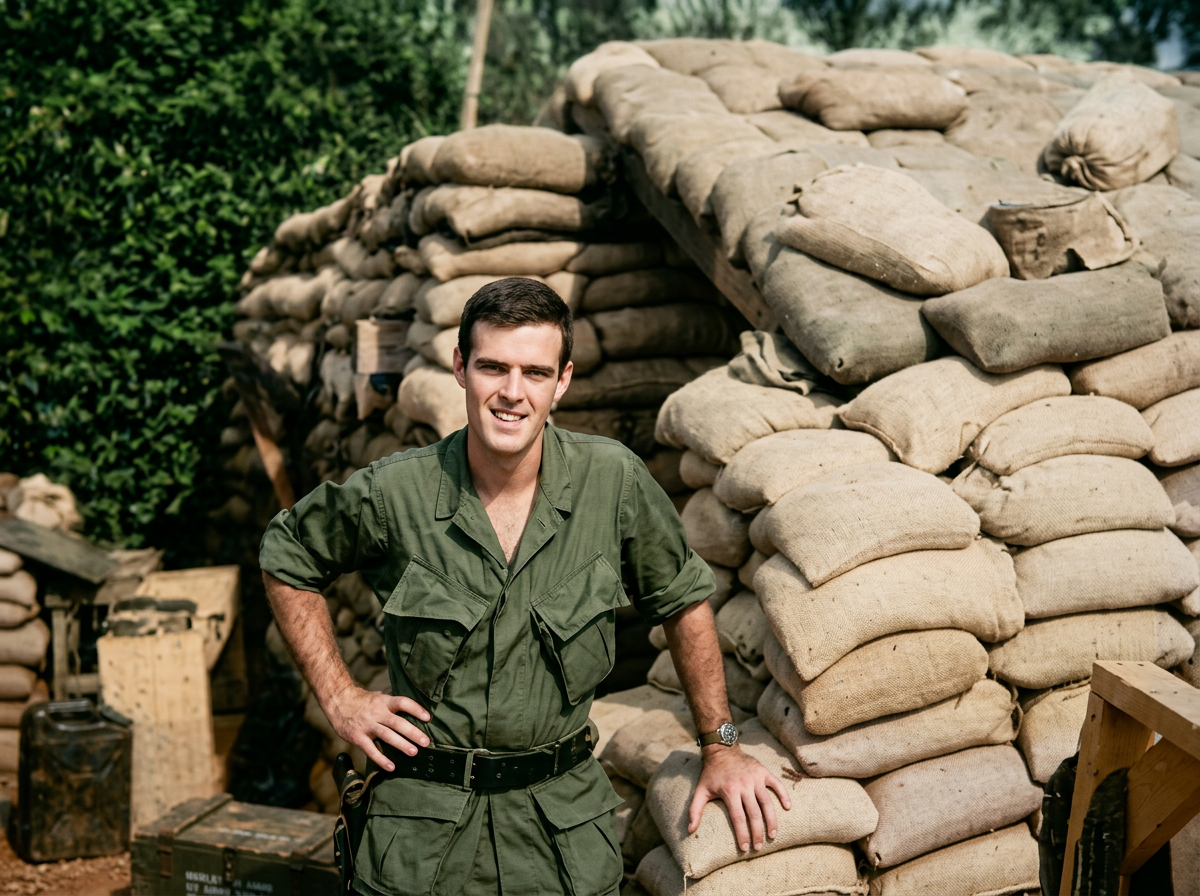
Michael Hennessy, January 15, 1968, Landing Zone Baldy, Vietnam


This lovely lady’s invitation to a writers’ group meeting had the effect Prozac and big pharma’s other psychotropics didn’t have for me; it gave me a life purpose. I put my life-ending plans on hold.

I went to that Saturday meeting a bit apprehensive. I do not know why I felt that way, as my fears were unfounded. The organization recently had been granted tax-free status by the IRS, meaning they now could solicit tax-deductible contributions.

The meeting opened with each person introducing themself with a mini biography, including military service. When it was my turn, sensing their ignorance of tax-exempt organizations and their operations, regulatory compliance requirements, I added that I was a retired tax attorney and was experienced in the nitty-gritty of these entities. I was energized. I knew I could help this organization flourish. My batteries were re-charging.

I also added that I had several clients with personal foundations. I committed to approaching them for grant money. I wrote a successful grant application to the Doyle Foundation and the writers’ group received $50,000.

I sat close to the front of the meeting room because of my poor hearing. I chose a seat next to and chatted up a man who introduced himself as Mike. We hit it off and have become friends. He is Mike Vopatek, a West Point graduate and fellow Vietnam veteran. His last comment before the meeting started was, “You’re the kind of guy I’d like to have a beer with.”

Many members of the Veterans Writing Group (VWG) have been awarded medals for valor and Purple Hearts for their wounds. They suffer the effects of post-traumatic stress disorder (PTSD) to some degree. They are universally adamant in their belief of the profound and cathartic relief experienced through the written word. They further understand their best audience is other veterans with similar experiences.

My oxytocin jets were pumping out positive emotions like I had not felt in months. I was surrounded by a group of veterans, most of whom were my age, many of whom had served in Vietnam, one of whom was at the same hospital in Japan as I, at the same time. It wasn’t family, but it was a great substitute. I had a purpose, or two or three or more. I was starting to wish I had not sent Andy’s painting to its new home in Rapid City. But, not to worry; it’s happy there.

I returned home early that afternoon and opened my computer to look for my old manuscript I started when my daughter was in high school; she is now age fifty with two children.

That draft manuscript described infantry platoon leader’s time in Vietnam. I was never able to pull it together to my satisfaction. I hired Hank Searles as editor. He was a prolific writer and editor. Hank told me he found humorous passages and wanted to focus on creating a funny book about Vietnam. He was emphatic, the world does not need another “war’s hell” book. The manuscript went back on the closet shelf to be taken down every year or two for another attempt in the dubious direction of eventual publication.

That afternoon I started with an idea that had occurred while I was sitting among the veteran writers. It was as if Calliope, the literary muse of Greek mythology, performed a lap dance on me. I wrote without awareness of time, hunger, or thirst. I stopped only long enough for a potty break or to get another drink.

That pattern continued. Seven months later I had a completed manuscript of a satire based on the Vietnam experience, now entitled, Landing Zone Gonzo.

My dear friend Jim O’Shea read an early version of the manuscript (which had a different title — Qualified Trumeters) and said, “I don’t get the title.” He was absolutely right. I put my ego back in the drawer and changed the title to Landing Zone Gonzo. My tribute to Schmoo remains but it is relegated to a paragraph with a description of his whimsical, semi-religious flak jacket epigram.

The point of all this for me is that the pen is mightier than big pharma and a lot cheaper. A New York Times article touts writing as the fastest-acting treatment for PTSD sufferers. I am living proof.

The woman’s invitation to the writers’ group was my salvation. She not only unlocked the door to my future, but also provided a gateway to help me to realize my writer’s ambition.

I think I just heard a bell ring!

Michael Hennessy

MIchael Hennessy
A Disturbance in the Force
 

On steadfastness, quiet generosity, and the language we’ve stopped using.


Dennis Banks is dead. His obituary states he died peacefully at age 84. I did not know this man, but after reading his brief, but beautifully-written memorial tribute in the St. Louis Post-Dispatch Newspaper Obituary Section, I believe I would have been enriched by knowing him and being counted among those who constituted his circle of friends.

I no longer reside in St. Louis, having left more than a half-century ago for the more temperate Southern California climes. As I aged through my Sixties, then Seventies, and now Eighties a weekly Sunday-morning ritual evolved. I would take my coffee to the home office, log on to the Post-Dispatch’s website, and check first on sports news of my beloved Missouri Tigers football team and then to the Obits section to see if I knew anyone among the list of decedents.

photo by José Ramos

As I scanned the names last Sunday, a photo portrait appeared of a small man whose face exemplified the quiet countenance of kindness. I stopped and read the ode to this four-decade career Boeing engineer who was a transplant from England. He couldn’t look more British than if he had the Union Jack face tattooed on his forehead.

The eulogy did not exceed 250 words, but each phrase seemed to magnify the measure of the personal loss of this dear husband, friend, brother, and uncle.

The death notice began, “Dennis Banks, a steadfast and hardworking man, passed away peacefully at the age of 84 on April 7, 2026, leaving behind a legacy defined by dedication and quiet generosity.”

That caught my eye — “a steadfast and hardworking man;” and “quiet generosity.”

I was stunned by the choice of words. Who describes someone nowadays as steadfast and hardworking? Or exemplifying one’s quiet generosity? No one; it’s a rare but poignant compliment and in this age of selfies and Gen-Y, Z, or Alpha’ers. I doubt it would garner a second thought among any of them.

I concluded this man, Dennis Banks, was as special as the language chosen to define his legacy. I re-read his obituary several times and although it was brief, the essence of a true human being emerged; one who appeared content with himself and whom we should aspire to be like. His steadiness was apparently a guiding beacon to a safe harbor for friends and family for a reason; he was a man in full.

His lifelong partnership with his wife produced no children, but that vacuum was filled with his steady guidance or a helping hand extended, and as if he had nothing better to do than lend a listening ear whenever it was needed. What a man!

You don’t say those sorts of things about a person without a deep and abiding connection - a nexus, to him. This man seemed to be the epitome of a friend. Is it my imagination, or did they stop making people like Dennis? Or, perhaps they did but in diminished numbers.

His obituary concludes that he will be remembered for his strong work ethic, his dependable nature, and the quiet kindness he extended to those around him.

On my third re-read of this marvelous tribute, the final words of the obituary contain a universal affirmative and lesson: His life stands as a reminder that a meaningful legacy is built not in grand gestures, but in everyday acts of integrity and compassion.

Each of us needs to try to daily emulate Dennis Banks and extend our quiet kindness to all those around us if we intend to live in a better world, even if we have to fake it.

The obituary notes that Dennis is survived by his wife, extended family, and many dear friends who will miss him deeply.

When I did the final read, I was reminded of a scene from the original Star Wars movie when Obi Wan Kenobi senses a loss in The Force as the planet Alderaan explodes when attacked by the Death Star’s super laser. We should all feel the same sense of loss with Dennis’ passing or on the occasion of the passing of a close relative or friend. We must constantly be reminded of the Dennises of this life and their commitment to treating others with compassion and the goodness that results and make that our minimum standard of social interaction.

We need steadfast and hardworking guides in our lives like Dennis Banks to remind ourselves to foster quiet generosity.

Michael Hennessy

MIchael Hennessy
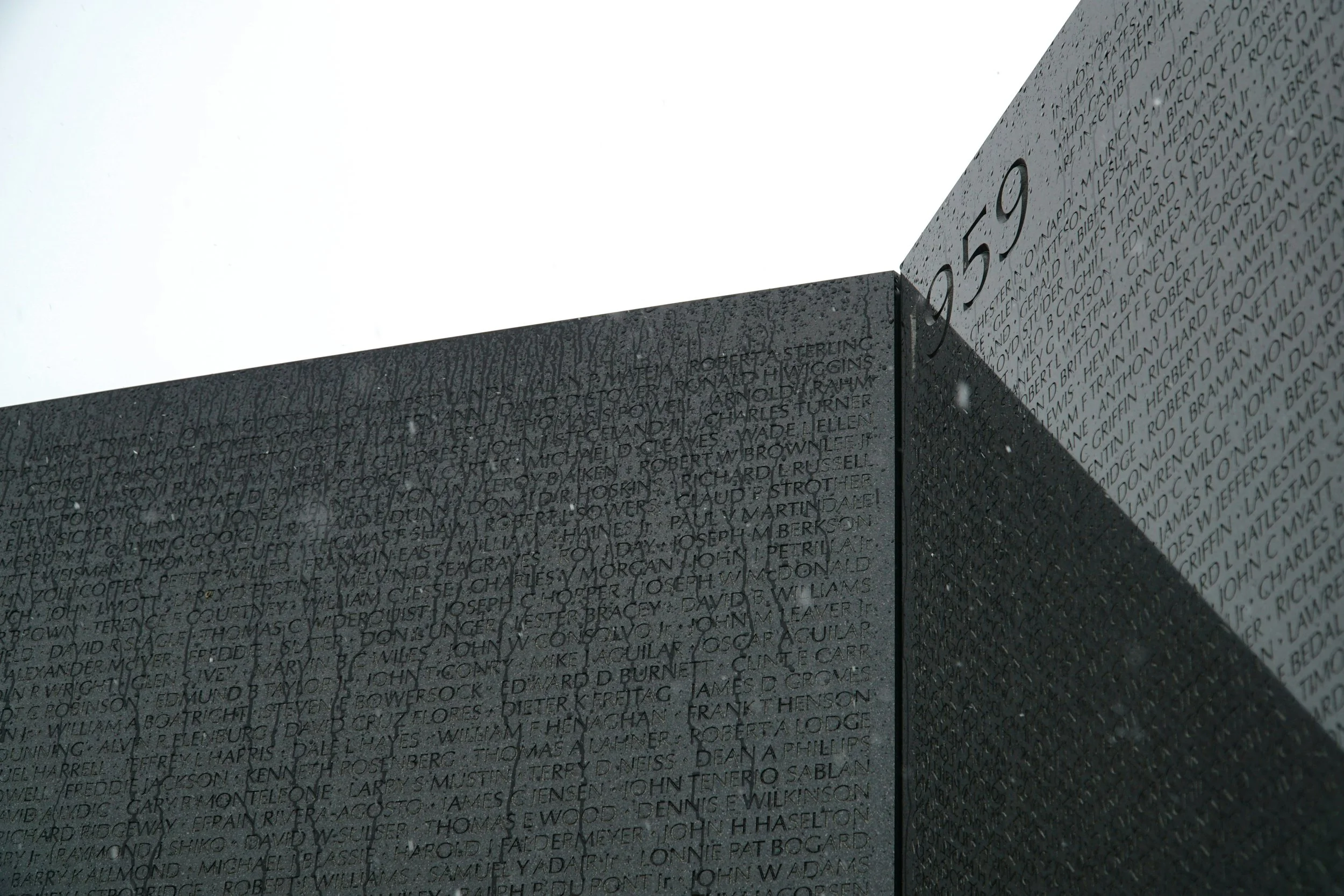
Panel 14

A Retrospective on my Visit to the Vietnam war memorial on 11 April 1990

In the spring of 1968, I had the good fortune to be hospitalized in Vietnam. Good fortune being equally divided between safely getting my rear end out of Vietnam and meeting Butch Skillman. We were both lieutenants and patients. About the time I met Butch, the war ended for me. I went home; back to “The World.”

I did not see much of Butch until the 1990s when he moved his family to Arizona while he pursued a Ph.D. in mathematics at the University of Arizona. Butch is my best friend; despite the fact we’ve met but a few times. The three-month stint we pulled at the 249th General Hospital in Japan joined us at the hip like we were born in Siam.

We hatched a plan to travel to the Vietnam War Memorial in Washington, D.C. during his spring break from teaching duties at South Dakota School of Mines. Our conversations during the drive from Rapid City to Washington, D.C. speculated on possible emotional effects of the visit. It was like sitting around the fire telling ghost stories on a Boy Scout camp out.

The morning after we arrived in Washington, we drove to the Memorial. We checked each other out with the same nervous chit-chat and gestures typical of our pre-combat assault jitters as young platoon commanders and forward observers. Like waiting to be picked up by helicopters for a Disneyland-like “E Ticket” ride, possibly to the Pearly Gates.

photo by Ian Hutchinson

Recalling memories of riding on a helicopter full of armed, frightened men, racing toward a hostile landing zone at treetop level at over 120 miles per hour, still makes my heart kick into passing gear. It doesn’t get much more exciting as one is never more alive than when he realizes his next breath could be his last.

In the distance, we viewed the majestic setting: Reflecting Pool and off to our right the Lincoln Memorial. The ground rose slightly away from the Constitution Avenue side.

I knew we were close to the Wall because of the silent procession slowly walking away, hand in hand, arm in arm. Faces reflected the solemnity of their experience.

My upper lip was covered with perspiration. I sniffled nervously and tasted the salt-rich liquid. I was point man as we started down the path into the bowels of the Memorial. My senses were in a Danger-Alert mode. Sniffing, listening, and seeing with a clarity only found this side of sensory overload. The Memorial jumped up at me like a skinned knee off hot pavement. I was in the middle of it before I could react. There was no time to warn myself or scream the alert, AM-BUSH.

The stacks of names anonymous in rank and branch of service were as oppressive as the unusual, early spring heat and humidity. Nearing the closest edge of the first of the series of name-laden granite slabs, I felt as if I was slowly descending into ever-deepening water. Goose flesh covered my arms and back. I shivered. The hair at the nape of my neck stood on end, reminding me of the reawakening of my base animal nature, dormant now for twenty-two years.

When I first encountered my ancient instincts, I thought I could smell a VC before I saw him. Today, I smelled nothing. I was immersed in the emotions of dread, betrayal, sadness, and loss. The excruciating sadness of the senseless sacrifice of such vital men and women. Which one of them took to his or her grave a cure for the AIDS virus or the skill to make their fellow man care enough to house and feed each other?

I searched a directory of names for known dead and those I hoped were not killed. I found Doug Fournet’s name on Panel 34. I touched the etching. My fingers softly traced each letter of: “Douglas B. Fournet.” I felt angry and sad. This lovely man was my roommate in Officers Candidate School (OCS). He was so full of life and hope for the future. He married shortly after OCS graduation. He was a good and dedicated husband and officer who died never having met his son.

I next searched for the location of the names of Robert Pullen and Daniel Wisely, both of whom were on the same panel since they were killed the same day. I searched for the name of the platoon leader who led my old platoon into the ambush, but he lived. I irrationally blamed him for Pullen’s and Wisely’s deaths and the other four dead as if my presence would alter the outcome. I wrongly believed they would not be dead if I remained in command of that platoon. An unreasoned conclusion but guilt has its own rules of construction.

On a nearby panel, I noticed the name John A. Greenfield. I worked closely with a Marine lieutenant named John Greenfield in the Combined Action Programs – “CAP Teams – CAP Lima.” When I saw the name, I remember shouting, “Oh, God no,” as I ran to the nearest directory to learn more about this John Greenfield. The deceased man was an Army corporal. My relief was whole. My Marine friend lived.

I did not reflect on the death of John A. Greenfield until the next morning. It saddened me to realize I felt nothing for this young man and the terrible effect of his death on his loved ones. Was he married, single, old, young, volunteer, or draftee? I did not appreciate the irony of trading the life of one John Greenfield for another – my friend for someone else’s.

I had promised myself I would not make a tracing of Doug’s name, but I made two. I sent one to my mother, since she pinned on his lieutenant bars our graduation day.

Throughout the visit to The Wall I felt the constant brooding omnipresence of the terrible and senseless waste of human life, and for what? Freedom? Bullshit! Eisenhower first and then JFK sold us down the Vietnam-commie-domino-flipping river. LBJ and Nixon doubled down further propagating the lie, as more names were etched in stone.

The war ended for me in May 1968. I stood in front of Panel 14, which corresponds to the approximate date of my departure from Vietnam. I stood about two-third’s way along the first of the Memorial’s two legs. Each leg extends two hundred seventy-six feet in length; and from one inch high at each end to over then feet tall at the center. The name of the first to die would nestle comfortably alongside the name of the last to die if the two ends were connected.

I did not realize two-thirds of the war’s dead or those declared missing in action, were lost after I left Vietnam. It was the year Nixon was elected president on an end the war with honor campaign. Forty thousand lives sacrificed for honor? Whose?

I was angry for not acting to stop the slaughter when I returned home. I didn’t protest. I didn’t march. I did throw my medals in the trash, but my mother repeatedly retrieved them. Instead, I crawled into my mental bunker to await the end of the unending-synapse-fracturing attacks of guilt.

The next evening Butch and I ate dinner on the patio at Phillips Fish Restaurant along the Potomac River. It was a lovely evening with a soft breeze. After dinner, we took a short cab ride to the Memorial and retraced our steps.

Night added a peculiar spirituality to the Memorial. Soft light reflected off the polished black granite surface. Fingerprints and lipstick smears were now visible on the lustrous surface, a testament to undying love.

The Wall contains no indication of rank or branch — only names. The ladder of death has no top nor bottom. It seems a sacred requirement each person represented on this wall appear here finally and eternally equal. A movie-star’s son name is next to a ghetto dweller, alongside a nurse, alongside a foreigner drafted into and serving in the U.S. military.

The Memorial did not mention my friend, Doug Fournet was posthumously awarded the Congressional Medal of Honor. This anonymity added to the purity of the stone tribute. Its shining skin so non-porous, but infinitely absorbent of the pain and emotions brought to it daily by friends and loved ones, ala a wailing wall.

We lingered until it was late like overstaying at an enjoyable party, but we understood our visit was complete. We said goodbye to our friends. I felt relieved and thankful I made the journey. I wasn’t granted absolution, but the experience was its own reward.

Butch and I swore a solemn oath if our government ever called his son, Matthew, to combat in a similar needless, egocentric war like Vietnam, we would do whatever was necessary to ensure Matt’s nonparticipation, even over his objection.

I said goodbye to Doug, Robert, Dan, and the others whose names I could not remember and the fifty-eight thousand, plus souls I never knew. Gradually, over the two-day visit, their grasp on me loosened and gently slipped away.

Amen.

MIchael Hennessy